
A commercial fire sprinkler system is only as reliable as the maintenance behind it. Without routine sprinkler maintenance, inspections, testing, and upkeep, even well-designed systems can fail when you need them most. Whether from closed control valves, corroded piping, or obstructed sprinkler heads. At Ironsmith Fire, we provide comprehensive fire sprinkler system maintenance and inspection services that keep your systems compliant and functional. We are ready to protect lives and property across the Nashville, Memphis, and Orlando metros.



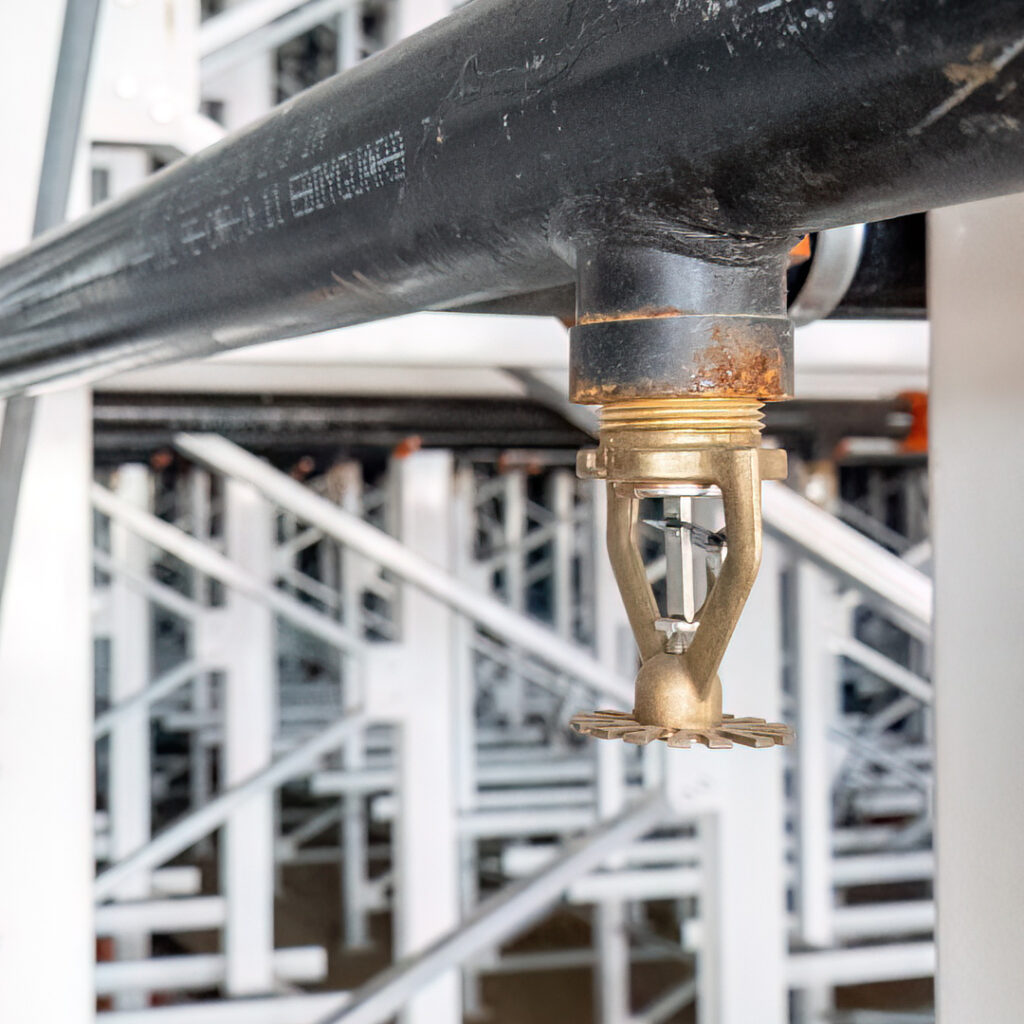
Regular sprinkler maintenance inspections aren’t just a regulatory checkbox. They’re how you prevent serious failures that put people and operations at risk. A control valve inadvertently left closed after a tenant improvement can render an entire floor unprotected. We’ve seen dry system piping lose air pressure overnight due to undetected pinhole leaks in corrosion-thinned pipe. Obstructions around sprinkler heads, such as stacked storage or new HVAC ducts, can block spray patterns. These issues often compromise coverage in ways that only become obvious during a fire.
Maintaining your fire sprinkler system protects business continuity, supports insurance requirements, and keeps you aligned with NFPA 25 inspection, testing, and maintenance (ITM) requirements. Documented maintenance also demonstrates your commitment to safety and compliance, keeping you audit-ready when authorities having jurisdiction (AHJs) or insurers request records.
Commercial fire sprinkler systems rely on multiple interconnected components, each with distinct failure modes we watch for during inspections:
Early detection of issues prevents minor problems from becoming costly system impairments or code violations.

NFPA 25 establishes minimum frequencies for inspection, testing, and maintenance activities. The standard differentiates between visual inspections that trained building staff can perform and technical testing that requires qualified NICET-certified technicians.
Building staff should perform visual checks of accessible system components:
These walkthroughs catch the most common problems before they compromise protection.
Quarterly valve testing and annual comprehensive inspections require qualified contractors. Annual inspections include main drain flow tests, verification of alarm devices, gauge calibration checks, and a detailed assessment of system conditions. For dry and pre-action systems, annual internal inspections of piping conditions help detect corrosion before it causes failures.
Our commercial fire sprinkler inspection services follow NFPA 25 protocols and provide the documentation your AHJ and insurer expect.
System impairments, whether from failed components, detected deficiencies, or planned modifications, require prompt contractor involvement. We’ve responded to leaking fittings at 2 a.m. Replaced entire zones of painted sprinkler heads discovered during annual inspections, and coordinated planned shutdowns for building expansions.
Ironsmith Fire provides responsive maintenance with clear deficiency reporting, in-house fabrication for custom components, and coordination with monitoring companies to properly manage impairment notifications.
Real-world facilities present complexity beyond basic wet pipe systems. Dry systems in cold environments require air pressure monitoring and low-point drainage. Pre-action systems in data centers need specialized testing of detection circuits and release panels. Renovations frequently alter ceiling heights, occupancy classifications, and coverage requirements in ways that demand engineering review.
Best practices for staying compliant:
Ironsmith Fire delivers professional commercial fire sprinkler maintenance across the Memphis, Nashville, and Orlando metro areas. Contact us for a site assessment—we’ll discuss system options, code requirements, and project timelines specific to your facility and budget.
Ironsmith Fire provides commercial fire sprinkler maintenance, inspection, and testing services across the Memphis, Nashville, Houston, and Orlando metro areas. We work with a diverse range of industries and facility types—including stadiums and event venues, healthcare facilities, data centers and IT facilities, multi-family housing and mixed-use developments, retail spaces and shopping centers, manufacturing and industrial facilities, educational institutions, and hospitality properties.
Our teams understand the unique fire protection requirements, occupancy classifications, and operational constraints that define each industry, delivering compliant maintenance programs tailored to your facility’s specific hazards and business continuity needs.
Life-saving fire protection for hospitals, clinics, and care facilities—designed to meet strict compliance standards.
Discreet, code-compliant fire systems for hotels and lodging—protecting guests and operations.
Custom systems built for high-risk environments with complex fire hazards and heavy machinery.
Fire safety for schools, colleges, and universities to protect students, faculty, and staff.
Fire protection for apartments, condos, and townhomes, built for both safety and efficiency.
Comprehensive fire systems built to protect large crowds in arenas, stadiums, and event spaces.
Tailored fire suppression solutions that safeguard retail environments without disrupting business.
Reliable fire protection for government offices, military facilities, and secure infrastructure.
Specialized suppression systems for airports, hangars, and aviation facilities—ensuring safety and readiness.
NFPA 25 establishes baseline frequencies: monthly visual inspections of control valves and gauges, quarterly testing of alarm devices and certain valves, and annual comprehensive inspections including main drain tests and internal pipe assessments for dry systems. Your specific intervals depend on system type, occupancy classification, and local authority requirements—some jurisdictions mandate more frequent testing for high-hazard occupancies or older installations. We recommend establishing a scheduled ITM program with a qualified contractor who tracks all required activities, maintains documentation, and adjusts frequencies based on system performance and regulatory changes.
Dry systems require specialized attention beyond standard wet pipe maintenance. Air pressure must be monitored continuously, with compressors inspected and low-point drains checked to prevent water accumulation that accelerates internal corrosion. Annual internal pipe inspections are critical—dry systems are particularly vulnerable to corrosion because trapped moisture and oxygen create aggressive conditions inside piping. Cold-weather exposure, valve trip testing, and priming water level verification add complexity. These systems demand contractors experienced with dry pipe nuances, as improper maintenance can lead to premature failures, freeze damage, or delayed activation during fire events.
Building staff can perform basic visual inspections—checking that control valves remain open and supervised, confirming gauge readings match baseline pressures, looking for obvious leaks or obstructions, and verifying sprinkler head clearances. These monthly walkthroughs catch common problems early and satisfy portions of NFPA 25 requirements. However, testing activities—main drain flows, alarm device verification, internal pipe inspections, gauge calibration, and any repairs—require qualified personnel, typically licensed fire sprinkler contractors or NICET-certified technicians. If you assign inspections to staff, provide documented training, clear checklists, and procedures for reporting anomalies to qualified professionals immediately.
Age alone doesn't mandate replacement, but NFPA 25 requires sample testing of sprinkler heads at 50 years in service, then every 10 years thereafter, to verify they still activate properly. Visible corrosion, physical damage, unauthorized paint or coatings, and loading (dust, debris, or foreign material) all compromise performance and typically require immediate replacement. During inspections, we assess each head's condition against manufacturer specifications and NFPA criteria. Corroded heads often indicate broader system issues—internal pipe corrosion or water quality problems—that need investigation. Replacement decisions should follow NFPA guidance, manufacturer recommendations, and your AHJ's interpretation, with all changes documented in your maintenance records.