COMMERCIAL KITCHENS
By the Ironsmith Fire Engineering Team · Tennessee, Florida, Texas, Arkansas
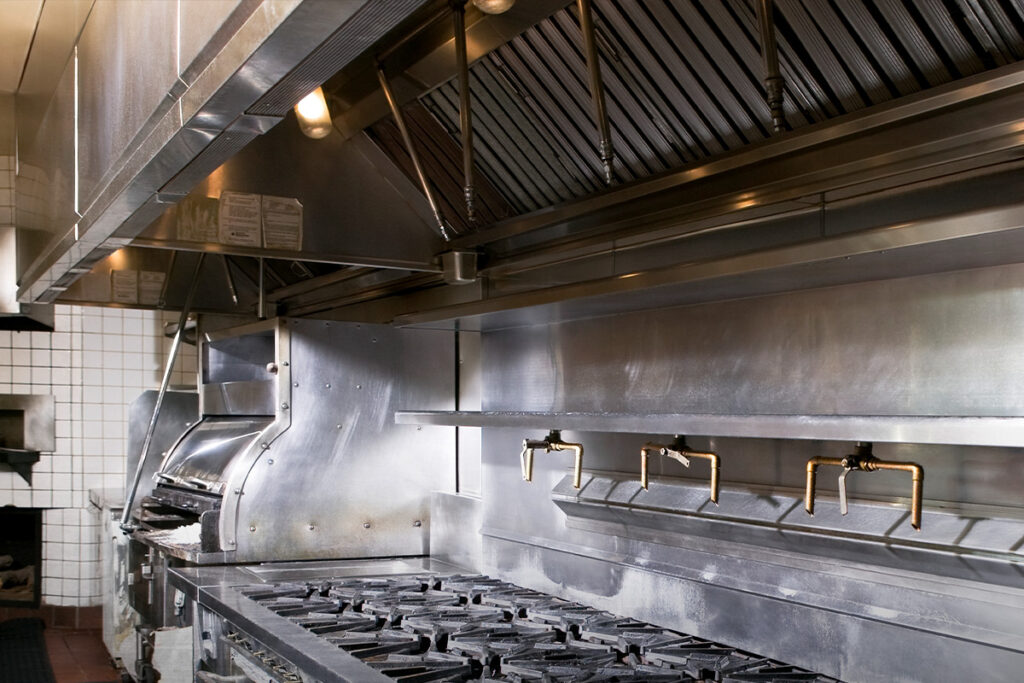
A kitchen hood suppression inspection is the semiannual service of the fire extinguishing system that protects commercial cooking appliances, hoods and ducts. Most of these systems use a wet chemical agent. NFPA 96 and NFPA 17A call for a trained, qualified person to service the system at least every six months. That’s a tighter clock than the annual inspection most owners know from their sprinkler system, because grease, heat and moving appliances wear these systems down fast.
Quick facts
- Every six months, at minimum. NFPA 96 and NFPA 17A both set a semiannual service interval for kitchen suppression systems.
- You don’t just inspect fusible links. You replace them. NFPA 17A and NFPA 96 call for metal alloy fusible links to be replaced at least every six months.
- Hood cleaning is a separate job. NFPA 96 sets grease inspection by cooking volume: monthly for solid fuel, quarterly for high volume, twice a year for moderate volume, yearly for low volume.
- UL 300 is the benchmark. Systems installed before November 21, 1994, and dry chemical systems, generally don’t meet it.
- The shutoffs are part of the system. When the system trips, fuel and power to the cooking appliances have to shut off.
- The tag tells the story. Fire inspectors check the date. A tag older than six months is an easy write-up.
Why kitchen hood suppression inspection runs on a six-month clock
A sprinkler system lives in a clean ceiling. A kitchen suppression system doesn’t get that luxury. It lives in the worst spot in the building. Here’s what wears it down.
Grease
Cooking vapor rises, cools and sticks to whatever it touches. That includes nozzles, detection lines and fusible links. A coated nozzle can spray off target. A coated link might not release when it should.
Heat
The detection side sits in heat all day, every day. That heat cycling is a big reason fusible links are treated as a replacement part on a schedule. You don’t wait for one to fail.
Appliances move
Kitchen suppression nozzles are aimed at specific appliances. Swap a fryer for a griddle, move a range a foot to the left, or add a charbroiler, and the coverage might not match anymore. Kitchens change fast, and the system doesn’t adjust itself.
Hotter cooking
Modern fryers are well insulated and hold heat, and today’s vegetable oils ignite at higher temperatures than the animal fats kitchens used decades ago. That’s why the UL 300 test standard arrived in 1994, and why wet chemical agents, which cool as well as smother, became the norm.
What happens at a semiannual service
A kitchen hood suppression inspection should cover the whole chain, from detection to discharge to shutoff. Here’s what your technician should do:
- Replace the fusible links and date them.
- Check every nozzle for aim, blowoff caps and grease buildup, and confirm each appliance under the hood is covered.
- Test the detection and release. The system should operate as designed, without discharging agent into your kitchen.
- Check the manual pull station. It should be clearly marked, easy to reach and in the path of egress.
- Confirm the shutoffs. Gas and electric to the cooking line should shut off when the system trips.
- Check the agent cylinder and its service dates. NFPA 17A also sets periodic hydrostatic testing for cylinders on a multi-year cycle.
- Update the tag with the date and the technician’s signature.
Some local codes set fusible links to yearly replacement instead of six months. When two rules don’t agree, follow the stricter one or ask your fire marshal.
Your part between visits
The six-month visit isn’t the only check. Your staff should look at the system every month: pull station clear, nozzles capped, gauge in range, nothing hanging off the hood. Your Class K extinguisher belongs on the same walk.
Hood cleaning is a different job on a different schedule
Owners mix these up all the time, and it’s an easy mistake to make. The suppression service checks the system that puts out a fire. Hood and duct cleaning removes the grease that feeds one.
NFPA 96 sets how often the exhaust system gets inspected for grease, based on how you cook:
| Cooking operation | Grease inspection |
|---|---|
| Solid fuel, such as wood or charcoal | Monthly |
| High volume, such as 24-hour, charbroiling or wok cooking | Quarterly |
| Moderate volume | Twice a year |
| Low volume, such as churches, day camps and seasonal businesses | Yearly |
If there’s grease buildup, the system gets cleaned. Some jurisdictions license hood cleaners and suppression technicians separately, so you’ll likely have two vendors on two schedules. Put both on one calendar.
Is your system UL 300?
UL 300 is the fire test standard for restaurant cooking area suppression systems. It took effect November 21, 1994. You won’t find a dry chemical system listed to it.
Signs your system may not meet UL 300:
- It was installed before November 21, 1994.
- It uses dry chemical agent.
- The nozzles are large, around 2 inches across, and one nozzle covers more than one appliance.
- There’s no UL label on the cylinder.
An older system can still be serviced in some places. But you’ll likely have to upgrade when you change or add appliances, when your fire marshal or insurer requires it, or when the manufacturer stops supporting parts.
Where your kitchen system meets the rest of your fire protection
Your hood system protects the cooking line. Your sprinkler system protects everything else, and in many buildings the kitchen too. They’re two systems on two clocks: six months for the hood, and quarterly and annual work under NFPA 25 for sprinklers.
If your hood system reports to your building’s fire alarm, that connection needs testing too. And when a hood system discharges, it often means a fire got going. Have your sprinkler contractor check nearby heads and piping after any kitchen fire.
Our guide to fire suppression systems covers the main system types. Our NFPA 25 inspection schedule lays out the sprinkler side, and our guide to inspection, testing and maintenance explains how it all fits together.
Restaurants, hotels and campuses: keep your sprinkler inspections on schedule alongside your hood provider’s visits.
Frequently asked questions
How often does a kitchen hood suppression system need to be inspected?
At least every six months. NFPA 96 and NFPA 17A call for the system to be serviced semiannually by a trained, qualified person, and again after any discharge. It’s also smart for staff to do a quick visual check every month between service visits.
Why are fusible links replaced every six months?
Fusible links sit in grease and heat all day. Over time that can coat or weaken them, so they might not release at the right temperature. NFPA 17A and NFPA 96 treat metal alloy links as a scheduled replacement part, at least every six months, with the date marked on each link. Some local codes set a yearly interval instead.
Is hood cleaning the same as a suppression inspection?
No. A suppression inspection checks the system that puts out a kitchen fire. Hood and duct cleaning removes the grease that fuels one. They’re separate jobs. NFPA 96 sets grease inspection by cooking volume, from monthly for solid fuel to yearly for low volume kitchens. Many kitchens use two different vendors for the two jobs.
How do I know if my kitchen suppression system is UL 300 compliant?
Red flags include a system installed before November 21, 1994, dry chemical agent, large nozzles around 2 inches across that cover more than one appliance, and no UL label on the cylinder. No dry chemical system is listed to UL 300. Your suppression technician can confirm the listing.
Who can inspect a kitchen hood suppression system?
NFPA 96 calls for a properly trained and qualified person. Many states and local fire departments also require a license or certification for kitchen suppression work. Check with your local fire marshal for what’s required where you are.