
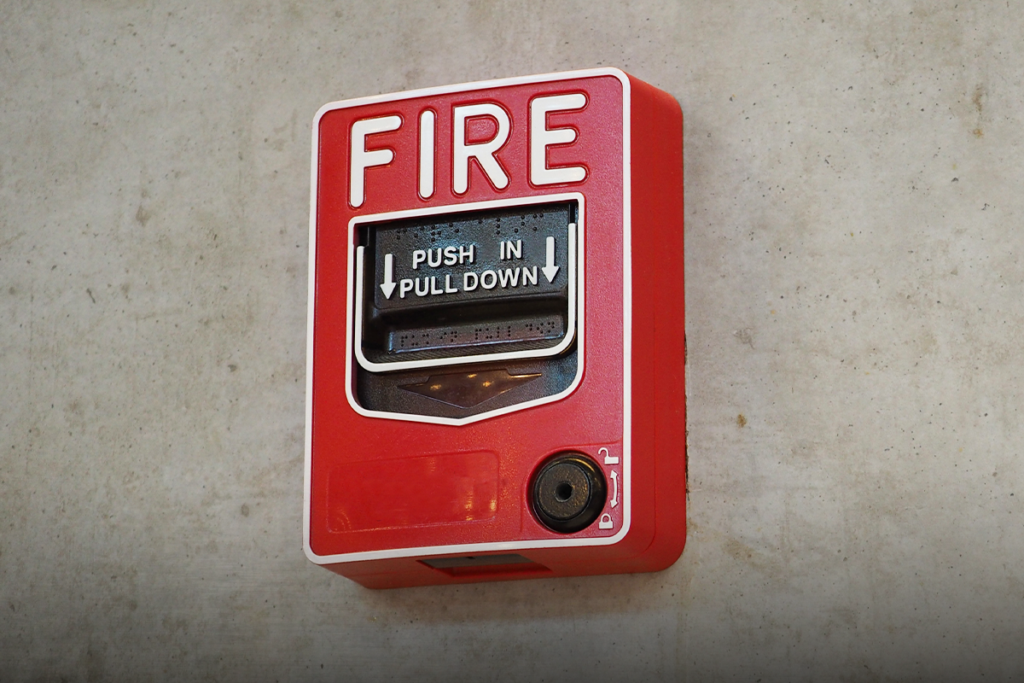
NFPA 72 COMPLIANCE
By the Ironsmith Fire Engineering Team · Tennessee · Memphis and Nashville
NFPA 72 is the National Fire Alarm and Signaling Code, and Chapter 14 is where inspection, testing, and maintenance requirements live. The frequencies that apply to your building depend on which edition of the code your jurisdiction adopted, and in Tennessee that is not the same answer everywhere. Knowing which edition your AHJ enforces comes before scheduling anything.
Quick facts
- Governing code: NFPA 72, National Fire Alarm and Signaling Code. Chapter 14 covers inspection, testing, and maintenance
- Current edition: 2025. That is not automatically the edition you are held to
- Tennessee, at the state level: the State Fire Marshal enforces the 2021 International Fire Code, effective April 17, 2025. NFPA 72 comes in by reference, not by name
- Nashville and Davidson County: a different code set entirely, the 2018 editions of NFPA 1 and NFPA 101 with local amendments, under Metro Code section 10.64
- Three separate obligations: inspection, testing, and maintenance are not three words for the same visit
- The fourth obligation everyone forgets: documented records
Your fire alarm system has one job, and it only has to do it once. Between now and that moment, the code expects you to prove the system still works. This guide covers three things in the order that actually matters: which code applies to you, what Chapter 14 asks for, and how to find your specific frequencies from the source instead of from somebody’s blog.
First, which code actually applies to your building?
NFPA 72’s current edition is 2025. That is not automatically the edition you are held to. Codes apply through adoption: a state or local government adopts a specific edition, and that adopted edition is what your fire marshal enforces.
At the state level in Tennessee, the State Fire Marshal’s Office enforces the 2021 International Fire Code, effective April 17, 2025. Tennessee does not adopt NFPA 72 by name. Fire alarm requirements arrive by reference through the adopted IFC.
In Nashville and Davidson County, the code set is different. Metro enforces the 2018 editions of NFPA 1 and NFPA 101, with local amendments, under Metro Code section 10.64.
Read that twice, because the practical consequence is real. An identical building in Nashville and an hour down the road can trace its fire alarm obligations back through different adopted documents. Same system, same manufacturer, same devices, different governing path.
This is not a technicality that only matters to code officials. It determines what your inspection contractor should be testing, on what schedule, and what documentation your AHJ will accept.
If you take one thing from this page: before you schedule anything, know which code edition your AHJ enforces. Any contractor worth hiring can tell you in one phone call. A contractor who cannot is guessing on your behalf.
What Chapter 14 actually asks of you
NFPA 72 Chapter 14 covers inspection, testing, and maintenance, and those are three different obligations rather than three words for the same visit. This is the most common misunderstanding we see from building owners, and it is the one that costs the most.
- Inspection is visual. Is the equipment there, undamaged, unobstructed, and in the condition it is supposed to be in? It is quick and it is frequent.
- Testing is functional. Does the device actually do its job when it is asked to? Does the detector detect, does the horn sound, does the signal reach the supervising station? Testing is slower, less frequent, and far more revealing.
- Maintenance is what keeps the first two from turning into a repair bill. Manufacturer-specified upkeep, on the manufacturer’s schedule.
A building can pass every visual inspection for years and still fail a functional test, because visual inspection cannot tell you whether a notification appliance will sound. If your program is only doing the fast, cheap part, you do not have a compliant program. You have a habit.
And then there is the fourth obligation everyone forgets: records. Chapter 14 requires documented ITM records. In practice, your AHJ does not want to hear that the work happened. They want the paper. An inspection with no record is, functionally, an inspection that did not occur.
How to look up your building’s frequencies, free, in about 20 minutes
Search for NFPA 72 inspection frequencies and you will find two dozen near-identical tables. Many of them are keyed to editions from a decade ago, and none of them know which edition your jurisdiction adopted. We are not going to add another one.
Here is how to get the real answer instead. NFPA publishes its codes for free reading online. Go to nfpa.org, find the free access section, open NFPA 72 in the edition your jurisdiction enforces, and go to Chapter 14. The inspection and testing frequency tables are there, organized by component.
Two cautions. First, read the edition your AHJ adopted, not the newest one, unless those happen to be the same. Second, the tables carry exceptions and qualifiers; the frequency in the row is not always the whole requirement. Smoke detector sensitivity testing, for example, runs on a different interval from smoke detector functional testing, and that distinction catches a lot of owners out.
If that sounds like more homework than you signed up for, that is fair. It is also exactly what you are hiring an inspection contractor to know.
Who is allowed to do the work
NFPA 72 expects inspection, testing, and maintenance to be performed by qualified personnel. That is not a formality. An inspection performed by someone who does not meet the qualification requirement is an inspection your AHJ can reject, after you have already paid for it.
When you are vetting a contractor, ask for the qualifications of the people who will actually be on site, not the company’s credentials in the abstract. And ask what their report looks like before you hire them. You are buying a document as much as a visit.
One team, every life-safety system
Most buildings run two vendors for one problem: an alarm company and a sprinkler company. When something is wrong, the alarm company points at the sprinkler company, the sprinkler company points back, and the deficiency stays open while you referee.
Ironsmith Fire is a full-service fire protection contractor. Design, install, test and inspect, service and repair. One team owns the outcome, one call, one set of records.
Fire alarm inspection and service is expanding into Tennessee. Today our inspection and ITM programs cover fire sprinkler and suppression systems, and that is where we can help you right now. If you are still working out how the two differ, we wrote a plain-English breakdown of fire alarm systems versus fire suppression systems.
Not sure when your sprinkler system is next due, or whether last year’s inspection actually closed out? That is a good place to start. We will tell you plainly where you stand.
Frequently asked questions
Does Tennessee adopt NFPA 72?
Not by name. The Tennessee State Fire Marshal’s Office adopts the 2021 International Fire Code, effective April 17, 2025, which brings NFPA 72 requirements in by reference. Nashville and Davidson County separately adopt the 2018 editions of NFPA 1 and NFPA 101 with local amendments under Metro Code section 10.64.
Who enforces fire alarm requirements in Nashville?
Nashville and Davidson County enforce their own adopted code set, the 2018 editions of NFPA 1 and NFPA 101 with local amendments, which is different from the code adopted at the Tennessee state level. Your local AHJ determines what applies to your building.
What is the current edition of NFPA 72?
The 2025 edition. Whether it is the edition you are held to depends on what your jurisdiction has adopted, and many jurisdictions enforce an earlier edition.
What is the difference between inspection and testing?
Inspection is visual, confirming equipment is present, undamaged, and unobstructed. Testing is functional, confirming the device actually performs when activated. They happen on different schedules, and passing one does not mean passing the other.
What happens if my fire alarm inspection turns up deficiencies?
Deficiencies are documented, quoted, corrected, and retested. The expensive failure is usually not the first inspection. It is the re-inspection, when findings from the first visit were never closed out.